
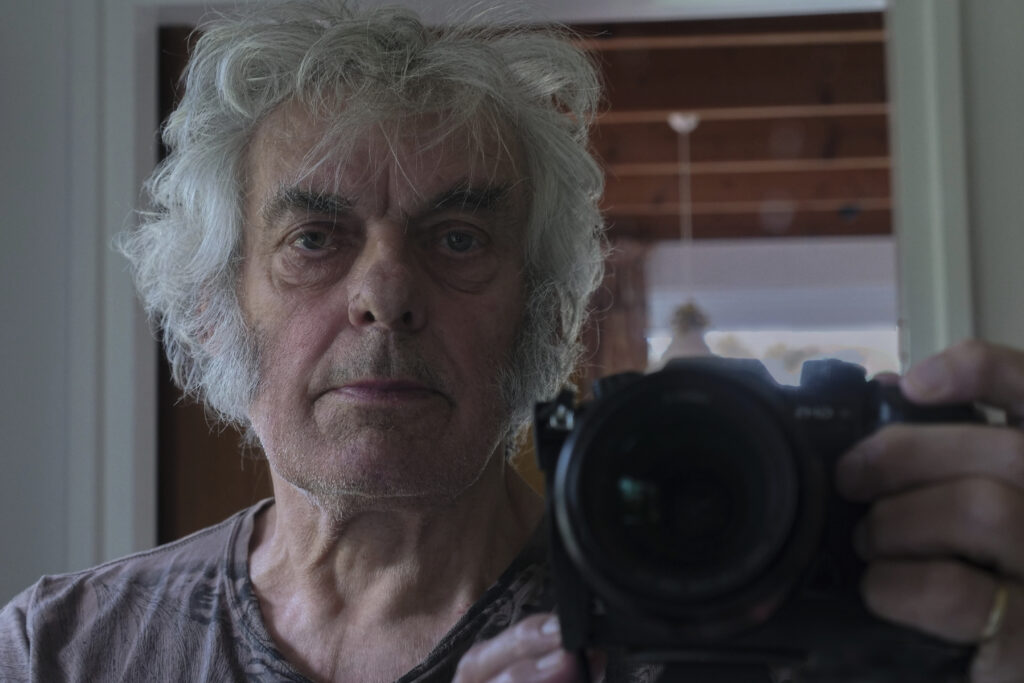
My name is Walter; I am 72 years old. I live in the Netherlands and work as a musician and photographer.
I underwent a PEARS procedure on May 27, 2026, at the AMC hospital in Amsterdam, performed by Dr. Dave Koolbergen. Now, more than three months after that operation, I am writing this account out of gratitude for the outcome I experienced.
I will begin with the events leading up to it:
In 2016, I developed an autoimmune disease—vasculitis or aortitis. After recovering from it, a CT scan revealed that my ascending aorta had a dilated diameter of 45 millimeters. From that point on, it was monitored annually, and by November 2025, it had grown to 55 millimeters. So, for ten years, I had known that this was the moment when surgery would become necessary.
Both my wife and I worried about this a great deal. What kind of future would I have after such a major operation? Would I still be able to pursue music and perform? Would my wife and I be able to continue living our lives as before—including our passion for intensive gardening? Our cardiologist described it as “the riskiest operation of its kind.”
However, neither my cardiologist nor we were aware of the new PEARS technique at the time. I learned about it when a friend sent me a newspaper article by science journalist Gemma Venhuizen. She had undergone the procedure herself. In the article, she provided a detailed account of her experiences and her research into the technique.
I recognized my own condition—the aneurysm and dilated aorta—in her story, and I saw the procedure as an opportunity because it is far less invasive and risky than the conventional surgery. After all, I would not need to be placed on a heart-lung machine, the aorta would not need to be cut open, and the operation itself would take much less time. Although my cardiologist had never heard of PEARS, I asked her to refer me to Dr. Koolbergen in Amsterdam so I could undergo this specific procedure.
Once I was approved for the procedure, I had to wait nearly four months—a period my wife and I found very difficult. We were already deeply worried about what lay ahead. Fortunately, we were able to discuss these concerns openly with a social worker attached to the cardiology department. The surgery had a significant psychological impact on me—before, during, and after the hospital stay. Being able to discuss this with the social worker was a tremendous source of support for us.
I spent a total of nine days in the hospital, two of which were in the intensive care unit. Afterward, I experienced little pain, though I did suffer from shortness of breath when walking. I was highly motivated to recover from the very start, so I was already walking laps around the ward while still in the hospital. At home, I also began exercising on a stationary bike right away, starting with very short, light sessions. Just as with walking, I initially struggled with shortness of breath, so I would take a break after a few minutes; however, things improved quickly. In fact, I felt better each day than the day before. After the initial six-week period, I was fully ready to resume my daily activities. I had never before enjoyed vacuuming or grocery shopping quite so much.
I did experience a number of unpleasant complications after the surgery—issues not directly related to the PEARS procedure itself, but rather to the major surgery involved. For instance, I developed a urinary tract infection in the hospital following a catheterization, and once home, I suffered from a bowel obstruction and “foot drop.” Walking immediately became a problem, as I suddenly had to be cautious due to the risk of falling. The neurologist who diagnosed the foot drop suspected it might resolve within two or three months; he had encountered foot drop in post-operative patients before. I practiced extensively with my feet and legs, and fortunately, the neurologist’s prediction proved correct—indeed, after just over two months.
It has now been over three months since the surgery, and I can honestly say I feel excellent. I am back to doing all my household chores, training intensively, and fully engaged with music; in two weeks, I will be performing again for the first time. I am completely unaware of the PEARS prosthesis; everything feels just as it did before.
A huge weight has been lifted from my shoulders. For ten years, we had seen this looming—a burden you carry with you, often without even realizing it. Life now feels noticeably lighter, and I am grateful to everyone who contributed to this: the fantastic surgical team, the wonderful nurses, the developers of the PEARS prosthesis, and—in particular—its inventor, Tal Golesworthy.